Tuesday, March 10, 2009

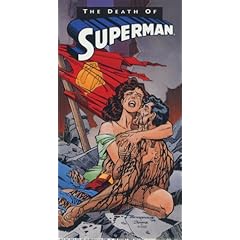
The Death of Supermen


The first comic book I ever owned was “The Death of Superman.” I was not into comic books when I was a kid mostly because I could not afford them. I contented myself with reading the five-peso Tagalog Funny Komiks that came in with the Sunday newspaper. I would have to admit though, that I was a Superman fan as a kid. Who wasn’t? Especially when the three Christopher Reeve movies came out (the fourth was a bit too much, I think, and I agree with Brian Singer for not even considering the fourth one in his story arc for the remake), every kid believed that wearing a red cape (and their underwear over their pants) would make them invincible and allow them to fly. And so we cried our ways into forcing our mothers to buy us these Superman outfits.

When I heard that they killed Superman, I was forced to save up my allowance so I can buy the comic books. They have got to be kidding. I had to read it for myself. I mean, who can kill Superman, right? This must be some marketing ploy.

Years later I realized that it was indeed a marketing ploy. Apparently, the Superman franchise was not doing so well with their sales that they had to do something drastic to revive it. But it wasn’t just a marketing ploy. They really killed Superman. They created an invincible alien monster that beat the hell out of the Justice League. The entire cadre of super heroes in the DC universe lent their hands to stop the rampage. Even the most obscure and unknown heroes had a shot at the villain. When all of their combined powers could not put a halt to the carnage he was causing, they sent the Man of Steel. But the Son of Krypton got beat up as well by the monster who was called Doomsday.

That last spread in the comic book was etched in my mind forever—Lois Lane, holding in her arms the lifeless body of her fiancĂ©. The invincibility of Doomsday did not make any sense. We did not understand why the enemy was unbeatable. The plot probably was pathetic and contrived. The battle was absurd. But it did not matter. It did not matter how lame he died. They killed the picture in every child’s mind that they could fly. Superman was dead.

After the death of Superman, dying became the “in” thing. I mean, if the superhero par excellence could die, why can’t the lesser ones? A lot of the other superheroes followed suit. Batman’s Robin died (the second one). Even the Marvel heroes started to follow the fad. The Ghost Rider died. Captain America followed, and then Jean Grey, Professor X, and Colossus. They even killed the entire X-Men in one episode of the animated series. I almost thought they’d kill my favorite of all—Batman. But they decided to just break his back and make him an invalid instead. They probably thought too many superheroes were dying already.

We have always been attracted and fascinated by these super humans mostly because of their special powers and god-like abilities. We project in them the things that we wished we could do—fly, disappear, shoot fireballs from our eyes, morph, read minds. But I think, what attracts us to them the most, or I should say, what endears them to us is their human and wounded side. They too, like us, bleed. They weep, they are anxious and stressed, they mourn, they struggle, they die. Their difference from us due to their superpowers is dwarfed by our similarity to them as humans who struggle to be perfect. No, this is not just an affinity due to the misery they accompany us with. It is not because we take pleasure from their failures and imperfections because we too are.

Of course we will always envy these superheroes for having the superpowers that we will never have. Despite this, we will always admire them and look up to them. We will continue to aspire to be like them not because of their powers but because they overcome their difficulties and succeed in their struggles only with their human virtues—courage, honor, nobility, faith, fortitude, and compassion. And so we realize, that we are more like them than we imagined. We are not that different. We already have what they have. We can endure the way they endure—with our humanity.

The death of Superman teaches this: superheroes die. Their deaths remind us of this affinity with them—we share the same human nature, the same weaknesses and the same virtues. Paradoxically, these deaths do not and should not depress us and let us fall into despair. It stokes our passion, in fact, to carry on their cause. The death of a superhero is the birth of a hero inside us. The torch is passed at the instant of their death. Our affinity and bond with them demand that we carry on their fight.

This fantastic visual-literary form reflects social reality with bitter accuracy. We will always remember the only revolution that we would probably be proud of—the 1986 EDSA people power. The flooding of EDSA with fired-up hearts to overthrow a dictator was caused by a crack in the dam of the Filipino’s tolerance and patience. It happened three years before at the tarmac of the Manila International Airport when Senator Ninoy Aquino was shot dead. It was a grim day for all those who witnessed it. I was barely a toddler then when it happened, but I remember the zeitgeist. His death was the birth of something inside the Filipinos then. Three years later, the Filipinos could not hold it much longer. The dam broke, and they let loose a cry similar to that of Lois Lane’s and the rest of the Justice League. They mourned, and then they carried on their hero’s battle.

In a more global historical picture, we are reminded of Mahatma Gandhi, the political and spiritual leader of India, who advocated resistance to tyranny through civil disobedience and total non-violence. He was assassinated while enjoying his nightly walk at Birla Bhavan. His death only echoed his teachings and principles throughout the world. It even reached Martin Luther King, who drew from his writings and eventually suffered the same fate. His death would create the same impact to the African-American people as well.

And there are countless other powerful heroes who died for a cause. Suffering an absurd if not untimely death before they can finish what they have started. There is John Paul II, Che Guevarra, Jose Rizal, Jesus Christ, and the list will go on. Their deaths would be their ultimate heroic act. Because through their deaths, we, the not-so-super, can now step up to become heroes.

It is a painful realization that it should take the death of a superhero before the ordinary can realize that they can become heroes as well. It is somehow a bitter truth that it takes the death of a super hero to give birth to the heroes inside us. It should not take such a tragic event to shake us off our sleep. But it is the painful truth. Again, we are reminded of our weaknesses and imperfections. But this should not discourage us nor make us pity ourselves. We look up to our heroes and we see not their superpowers but their human virtues and strengths, which we too have. Of course, their deaths unwittingly put us in a position of responsibility. We have to carry on or else their deaths would have been meaningless.

After the franchise picked up sales, Superman returned. I thought, what the hell? Whatever. But really, his return cannot invalidate the insights of his death. That is the sublimity of this tragic truth—heroes die so new heroes can be born inside us. We only wish that a hero’s death is not always required to awaken our hearts. We hope that it will not always require a tragedy to call us to action. But we are not so super. It is okay. We struggle. We strive. As men.

*previously published in Starfish Magazine February 2008 issue

Friday, March 06, 2009

Top 5 Gimik para sa mga Lalaking Takot sa Beach


Walang pera pang beach? O nahihiya ka lang ipakita ang six pack mo na pinagsama-sama sa isang keg?

Heto ang ilang mga tips kung ano ang mga pwede mong pagkaabalahan ngayong summer vacation kung nabibilang ka sa mga Lalaking Takot mag-beach.

1. Sun bathing sa bubong. Kung gusto mong magka-tan pero nahihiya kang humiga sa sea side at magbabad sa araw dahil para sa iyo, hindi nagsa-sun bathing ang tunay na lalaki, mag sun-bathing ka at the privacy of your own
home! Umakyat ka sa bubong at tagpiin mo ang mga butas ng yero na tatlong buwan nang pinapaayos sa iyo ng nanay mo. Nag-enjoy ka na sa iyong private sun bathing, nakatulong ka pa sa pamilya mo sa parating na panahon ng tag-ulan. At dahil yero ang tutuntungan mo, isa itong napakalakas na reflector ng sinag ng araw kung kaya’t tiyak na tustado ka sa loob pa lamang ng 15 minuto! Get the same effect with less the time! Sa sobrang init, tiyak na tunaw lahat ng taba mo dahil tatagaktak ang pawis mo. Pagbaba mo ng bubong, ang keg mo ay tiyak na six pack na!

2. Sand Castle trip. Para sa mga mahilig magdisenyo ng mga bahay at mahilig magtayo ng sand castle noong maliit pa sila pero nahihiya na ngayong gumawa noon sa beach dahil baka pagtawanan ka ng mga chicks na naka-long sleeves mag sun bathing, huwag kang mag-alala. Narito na ang YoVille at the Sims! Gumawa ka ng facebook account at maglaro ng YoVille o kaya, bumili ng larong the Sims at gumawa ka ng sarili mong bahay, (pati interior, pagbuhusan mo ng creative juices mo!) maki-interact at kumita ng maraming pera! Right at the comfort of your own desktop! Kung gusto mo pa, mag-beach ka na rin sa Sims!

Kung wala ka namang perang pambili ng computer, bili ka na lang ng clay at doon mo ibuhos ang frustration mo sa paggawa ng sand castle. Kung wala ka pa ring pera pang-clay, mag-apply ka ng internship sa panadero doon sa kanto ng kalye ninyo at pagpraktisan mo ang arinang ginagawa niyang pandesal. May trip ka na, may internship ka pa! Hindi mo na kailangang mag-apply ng OJT pag balik mo sa eskwela next semester!


3. Physical exercise. Dahil may butas na daw ang ozone layer, hindi na masyadong healthy ang outdoor sports tulad ng beach volleyball. It is still best pa rin ang manatili sa loob ng bahay ngayong summer. Para sa mga ayaw amining batugan lang silang lumabas ng bahay, pasalamatan ang Nintendo para sa kanilang kagila-gilalas na imbensiyon. Ayon sa mga haka-haka, ang Wii ay inimbento ng isa ring lalaking takot mag-beach. Sa halagang hindi lalampas sa beinte mil, solb na ang sampung summer vacation mo with outdoor sports played inside your living room. Pwede mo pang hatakin ang iba mo pang barkadang takot mag-beach para maglaro ng tennis, baseball, and kung gusto ninyo ng pangmaramihan, ang classic na Mario! Huwag lang kayong magtabi-tabi habang naglalaro at baka magkasakitan kayo.

4. Swimming! Hindi makukumpleto ang summer kung walang swimming. Pero paano kung isa ka sa mga Lalaking ayaw mag-share ng kanilang keg ab? Huwag mag-atubili at balikan lamang ang isang kaligayahang matagal mo nang natuklasan noong bata ka pero ewan mo kung bakit hindi mo na ginagawa--ang magtampisaw sa batya! Ilabas ang batya ni Inday, buksan ang gripo at padaluyin ang malamig na tubig lababo. Babaran ng Perla sa ilalim para magkaroon ng bula (o di ba? May bath foam ka pa!). Gaganda pa ang kutis mo dahil Perla na sabong panlaba ang skin conditioner mo!

Magtawag ng kabarkada. Yayain sa batya. Ika nga nila, save water, shower with a friend. At tutal, dahil nahihiya kang maghubad dahil ayaw mong makumpara ang six-pack mo sa six-pack ng iba, ituluy-tuloy mo na! Tutal nasa batya ka na rin lang, ituluy-tuloy mo na ang ligo mo sa paglalaba! Nakatulong ka pa kay Inday!

5. Mag beach ka na lang kaya? Okay, hindi ka makatiis? Lahat ng barkada at pamilya mo ay magbibeach sumama ka man o hindi? Magpapatalo ka? Kung hindi ubra sa iyo ang lahat ng ipinayo ko sa itaas, wala ka nang choice kundi ihanda ang iyong mga pandesal. Kung napilitan kang makipagsabayan sa mga katropa mong nagtitinda ng pandesal habang nagsasun-bathing pero isang monay lang ang dala-dala mo, dalawa lang ang maaari mong gawin: a) gawing pandesal ang iyong monay, o b) panindigan mo ang iyong package. Sa totoo lang, hindi na uso ang six-pack ngayon! Ang hanap ng mga babae ay ang marunong ng karinyo. Sino pa ba ang expert dun kundi ikaw na may sangkatutak na love handles? Kaya nga tinawag na love handles yan para i-handle! If you have it, flaunt it! Huwag ikahiya! Ang malaking tiyan ang marka ng isang tunay na lalaki! Ano ngayon kung malakas kang mamulutan? Ano ngayon kung mataas ang alcoholic tolerance mo? Ano ngayon kung mahilig ka sa maluwag na dark-colored shirts? Misteryoso ka lang at consevative kamo! Yan ang hinahabol ngayon. Pero kung trip mo pa rin ang option a, lakarin mo mula bahay mo hanggang beach, pagdating mo dun, may abs ka na.

Monday, March 02, 2009

Acting: Mastering the Self

“Is it possible for the actor to practice this art without sacrificing his own personality, provided he has one, or must he be without one at all so that he can always be ready to assume… ‘a borrowed soul?’”

Etienne Gilson, Forms and Substances in the Arts


Twelve years of theater has exposed me to two schools of thought in acting, which were also identified by Gilson in his treatise on theater. These two schools of acting can be classified under the two theories of the major theater artists-philosophers Stanislavsky and Brecht.

The first school of acting is more familiar to us as “Method Acting,” a style and approach made popular by Marlon Brando and Paul Newman. In more contemporary times, this approach was practiced by the late Heath Ledger in his portrayal of the Joker in “The Dark Knight” and Christian Bale as Batman or Bruce Wayne in the same movie. The Method was systematized by Lee Strasberg in the 1940’s derived from Constantin Stanislavsky’s system. The system utilizes training of the actor’s emotional memory and psychology. This method aims at the achievement of theatrical truth by immersing oneself in the character he is portraying. The actor draws from his own experiences and reactions to portray the role with psychological realism and emotional authenticity. The actors who employ this system are the ones Gilson mentions: “those who, acting by some kind of instinct, are dominated by their sensibility. Such actors are wholly in the grip of their roles and become as one with the character being portrayed.” (259).

The second school refers to the group of actors who “have no sensibility whatsoever.” Gilson describes their method: “By calculating in advance the manner in which they are to act down to its last detail until they achieve perfection, they succeed admirably in imitating all the gestures and all the expressions of a person like the one whose role they are to portray.” (259) This system requires more physical training than psychological and emotional. This school of acting disregards the need for the actor’s emotional attachment to the role in order to convey emotional truth. Bertolt Brecht was known for giving this system a name, the Verfremdungseffekt. This style was developed by Brecht not just for acting but for the development of theater in general for the purposes of education. Brecht claims that theater should make clear to the audience that what they are witnessing is merely a representation of reality and not reality itself. To achieve his aims of theater for education, Brecht devised this technique in his plays so that the audience will not have an emotional attachment to the characters and situations presented but instead, encourage and provoke them to reflect on what is represented on stage. One of the techniques to achieve this is to break that fourth wall separating the audience from the play and address the audience.

Theater directors and acting coaches developed this into a system of acting wherein the same level of “alienation” is applied to the characters being portrayed. Since they are staging merely a “show,” more importance is giv
en to what is seen by the audience rather than what is felt by the actor. It does not matter whether the actor is true to the role as long as it is believable to the audience.

We have simplified these two schools of acting into what we now call “internalization” and “externalization.” Internalization requires the actor to assume a “borrowed soul” by understanding the psychological and emotional motivations of the character and making it his own. The role is internalized with the belief that what is assumed in the soul will be reflected in the body and will be witnessed by the audience. Externalization requires the actor to study physical nuances and characteristics that will give the role a personality implied by the dramatist. The motives and intentions of the actor are irrelevant to the audience since it will not be seen. What is crucial are the actions and delivery of dialogue that will make the motivations, intentions, and emotions of the characters apparent to the viewers.

In these two approaches, as Gilson concedes, the actor is “never himself.” “Whether he renounces his real being to become the personage of his part or whether, having no definite self-identity, he fashions the soul of his character…” (259) However, I would like to scrutinize closer what Gilson means by the actor being “himself” an
d his idea of “self-identity” whenever an actor assumes a character using my twelve years of experience in theater as a playwright, director, and actor.

In my years as an actor and director, I have discovered that acting is highly psychosomatic. My first exposure to theater belongs to the first school of thought. Under the Rock Opera Company (ROC), our seniors, the directors Jourdan Sebastian, Iris Yu, and Third Domingo have demonstrated how it was to become methodical in the Stanislavsky sense of the word. In 1997, ROC staged “Lumipad at Dumapo sa Dahon ng Kalachuchi,” a highly-charged melodrama exploring the themes of suppression, lost love and insanity. I was an assistant director then, an apprentice without any background in theater production. The acting workshops were very intense. The actors were subjected to some sort of interrogation wherein they were forced to answer questions thrown by the director and they have to answer as the characters. This was a difficult exercise because in this workshop, the actors will have to respond without the security of the dialogue in the script, depending merely on the emotional and psychological reality of the characters as implied by the script. The process was very tasking and tiring and I conceded that it would take a great amount of creativity and imagination just to complete that workshop. The result was a showcase of the most gripping melodrama I have seen in that time. I would sometimes cringe at the emotional tempest and the “reality” of it as the actors purged their emotions on stage.

Robster Evangelista and Joel Parcon were not to be addressed by their real names a few hours before the show of the 2000 Kultura staging of “Murder in the Cathedral.” As they were dressing up and putting on make-up, they were already Thomas Becket and every action they portrayed was that of their versions of Thomas Becket. In my early years of theater, I have learned the psychosomatic characteristic of acting. This method hinges on the premise that what is in the soul reflects in the body. And actors of this system assumes a borrowed soul at the onset so that their physical realities are altered according to the dictates of the soul they assumed.

It was also around the same time, from 1997-2000 when I got exposed to the second school of acting without me being conscious about it. I would have to admit that I did not have the skill and talents of Joel Parcon, Robster Evangelista, and Third Domingo. Maybe because I did not have the personal experiences to draw upon to transform myself into another being. My first acting gig was in 1997 in my own play “Ang Trono” for ROC. My director and the lead actor had an argument so I had to replace the lead actor since I have memorized the script because I wrote it. However, I did not have the same facility as the lead actor who then was Jourdan Sebastian, known for his practice of the Stanislavsky System. I did not know how to “be” the character I wrote but I did know how to “act.” And so, I acted. I tried to simulate the actions of the characters, his voice, posture, and nuances through externalization. The performance yielded the same results based on audience feedback. In “Murder the Cathedral,” I was one of the priests who wept for Becket when he was brutally murdered. Maybe it was my difficulty with the language at that time which made it hard for me to mourn and empathize with the other characters. And so I faked my weeping by staring long enough into space without batting an eyelash. The tears began to fall and people believed I was weeping for Becket. But inside my head, all I was thinking was “Don’t blink! Don’t blink!”

What is this “himself” that Gilson was referring to? In both plays, and in succeeding plays I have acted in, I was always myself, insofar that I have never let the character take over my emotional and psychological being. But were Jourdan, Joel, Third, etc not themselves when they let the characters take over?

Gilson was correct when he said that the observations on the craft of acting were made “by writers who adopted the public’s point of view.” (262) This “being” is seen only in the perspective of the audience. How about in Method Acting? Isn’t that being assumed within the actor regardless of the audience?

Diderot raises a problem as mentioned by Gilson: “Here is his awesome judgement: ‘It has been said that actors have no character whatsoever, because by acting all of them they lose the one which nature gave them, that they become false just as the doctor, the surgeon and the butcher become callous. I believe that one has taken the cause for the effect and they are fitted to play all the character because they have none.’” (260)

This is where I disagree with Diderot. We go back to the two schools of acting, internalization and externalization. Method acting, or internalization, as described earlier, requires an intense forging of the inner self into another character. Contrary to what observers of theater believe (who have no theater experience whatsoever except for watching plays), it is never easy for an actor to lose one’s self in the exercise. For a real, well-trained actor to alter his emotional and psychological realities completely (or for any person at that), it requires a total brainwashing or hypnosis. The real artist, the actor, must have a complete mastery of his inner life, a full sense of control of his inner faculties, for him to transform it into another’s—to assume a borrowed soul. The actor must be able to access his emotional memory at will, drawing reactions and motivations from them to give life to an imagined person crafted by the dramatist. The actor must be a master of his emotions, calling upon them on cue as the script and the director dictates. An untrained actor, who does not have a personality or does not have a mastery of his inner self, cannot possibly achieve this kind of feat. He cannot call emotions at will or shape his actions easily without a sense of ownership of the self.

Externalization, on the same note, should not be dismissed as something less than method acting. This system also requires another mastery of the self—a mastery of the instrument, the main instrument, of the actor, which is his body. The same is true for actors of this system. Mastery of the body entails mastery of the soul. For the body to be commandeered into performing “alien” nuances and gestures to portray a character, one must have the same level of mastery of the soul. The soul must have an intimate relationship with the body. The body must be disciplined by a soul that has a full sense of himself, an ownership of being, contrary to what Diderot claims and what Gilson was worried about. This is why actors, before entering the stage, undergo physical exercises in the same manner that an athlete stretches his muscles and loosens up his joints before going into court. Every inch of his body must be under his command. As one of my favorite actors, Roni Balbieran would say, “You have not acted well if after the show, you are not physically tired.”

Diderot’s scruple, “one never becomes an actor for the love of virtue” (260) should be dismissed given the kind of self-mastery required to become an actor. In fact, an actor necessarily becomes a lover of virtue to dedicate his life in the perfection of this craft. What is virtue but a mastery of the self? One cannot attain virtue without mastery of the self. In the actor’s craft, both body and soul are mastered by the person so that he can portray a beautiful character with all his faults and virtues, to complete the dramatist’s act of forging an artwork of the beautiful on stage. This is the real actor.

However, we are faced by unfortunate realities where the craft of acting is not given due respect by “artistas” or showbiz actors. We are now under the impression that to be an actor, one must have a loose sense of self so that he can easily take on any other character. We are faced with actors who have no personality whatsoever, taking for their own whatever roles are given them in a mainstream film they have to appear in.

But it does not take a Philosopher of Art to realize that this is merely a misconception. We have been disappointed by mediocrity on screen (and onstage) by mainstream actors who portray this lack of virtue. In this situation, Diderot was not merely becoming scrupulous. He might even have been prophetic. However, in this case, there is no craft being talked about. Randomly interview any of these actors about the two schools of acting and 99 of 100 times, they wouldn’t know what to say. Therefore these are not the real actors. These people, I daresay, would be the “marionettes” Gilson was referring to. But it can easily be spotted in their fruits that there was no artistry involved whatsoever in their portrayal.

The real actor should be given more credit. Real actors can actually become an actor for the love of virtue. The fact that acting entails a tremendous amount of discipline and training to achieve self-mastery should be enough proof that the actor, the real one, is a man of virtue.


Tuesday, February 24, 2009

Love advice para kay Bartolome

Bartolome,

Hindi ka talaga sasagutin niyang nililigawan mo. Napaka-old school kasi ng mga tactics mo. Wala nang gumagawa ng ganyan. Sa panahon ngayon, lahat ng bagay, nagtaas na. Nagtaas na ang gasolina, nagtaas na ang presyo ng bigas at mga bilihin, nagtaas na ang pamasahe, at lalong nagtaas na rin ng standards ang mga babae. Hindi na uubra yang siopao at kalachuci mo. Lalo na yung huli mong binigay, hopia at santan. Ano ba pare? Ano’ng era ka ba pinanganak?

Pero don’t worry. It’s not too late. May pag-asa ka pa. Hindi pa naman siya kinakasal at di pa niya sinasagot yung crush niya na basketball player. Kahit lamang siya ng sampung paligo sa’yo, daanin mo sa utak at creativity. Dahil aminin na natin, iyon na lang talaga ang pag-asa mo. Heto, bibigyan kita ng mga simple, tried and tested na mga regalo para di siya mapurga sa hopia at siomai. Sundin mo ‘to, tiyak na lalaglag ang bagang niya sa’yo. Mga medyo more than your usual regalong panligaw:

1. Bili ka ng century tuna. Ilagay mo sa isang napakalaking box—yung sinlaki ng TV o kaya box ng desktop PC mo. Tapos balutan mo ng magarang pambalot. Kuntsabahin mo na yung teacher niya sa Calculus. Sa gitna ng klase, bigla kang kumatok sa classroom. Pero dapat, incognito ka. Magsuot ka ng LBC jacket, magshades, at magsuot ng surgical mask. Pagpasok mo sa classroom, iabot mo yung box sa teacher, at papirmahin mo ng acknowledgement receipt. Tapos pabuksan mo in front of everyone. Tignan mong mabuti ang reaction sa mukha niya.

Later during the day, pag tinanong niya kung bakit Century Tuna ang binigay mo, iikot mo yung lata at ituro mo yung sign na “Omega 8.” Pag tinanong niya kung ano yung Omega 8, sabihin mo: “because you’re good for my heart.”

2. Mangolekta ka ng isang dosenang hanger na libre mong nakukuha tuwing nagpapa-dry clean ka. Tapos, sa bawat hanger, isula mo: “I miss hanging out with you.”

3. Instead of roses, kuha ka ng tissue paper sa banyo ng school mo. Gawin mong tissue paper roses. Gawa ka ng isang dosena. Pag-abot mo, sabihin mo, “Ganito kalinis ang pag-ibig ko sa’yo.”

4. Bili ka ng tetra pack ng mantikang Minola. Tapos bilugan mo yung “with Omega 8.” Hindi na siya magtatanong kung bakit.

5. Bigyan mo ng ice cream cone. Dapat cone lang at walang ice cream. Pag hinanap niya yung ice cream, sabihin mo, “natunaw na kakatitig sa’yo.”

6. Bili ka ng sandosenang box ng crayola. Kolektahin mo lahat ng black. Lagay mo sa isang box ng crayola. Sa likod, isulat mo: “Walang kulay ang buhay kung wala ka.”

7. Bigyan mo siya ng mumurahing bumbilya. Alam mo na siguro by this time kung ano ang isasagot pag tinanong niya kung bakit.

8. Itext mo siya ng: “Hindi tayo tao, hindi tayo hayop, hindi tayo halaman. Bagay tayo. Bagay!”

9. Bigyan mo siya ng calling card ng MMDA. Sa likod, isulat mo “para pag nagkabanggaan ang puso natin.”

10. Padalhan mo ng Happy Meal pero huwag mong ibibigay yung libreng laruan. Paghinanap niya, sabihin mo: “Ako yung freebie, at ikaw yung meal na nagpapahappy sa’kin.”

Pag hindi ka pa niyan sinagot, ewan ko na lang.

Monday, February 23, 2009

Call the shot


Directed by X Vallez
Assistant Director: Javi Abola
Director of Photography: Dom Nuesa
Production Design: Issa Lopez
Starring the MDAFI Basic Batch 2008-2009 and MDAFI alumni